
When Student-Athletes Are Pressured to Play a Sport
A student’s environment, parents and coaches can make them love their sport — or want to quit.
By Madeline Jimenez
One of the biggest reasons a student-athlete quits their sport is pressure, which Cass Tech High School junior London Kirkland knows well.
From a young age, she said her parents made her play soccer in a recreational league to encourage physical activity. After a couple years, she switched over to volleyball, and the pressure she faced worsened. She was moved from a libero, a position where she led the team, to a defensive specialist, and Kirkland became upset by a lack of communication and unexplained decisions by her coach.
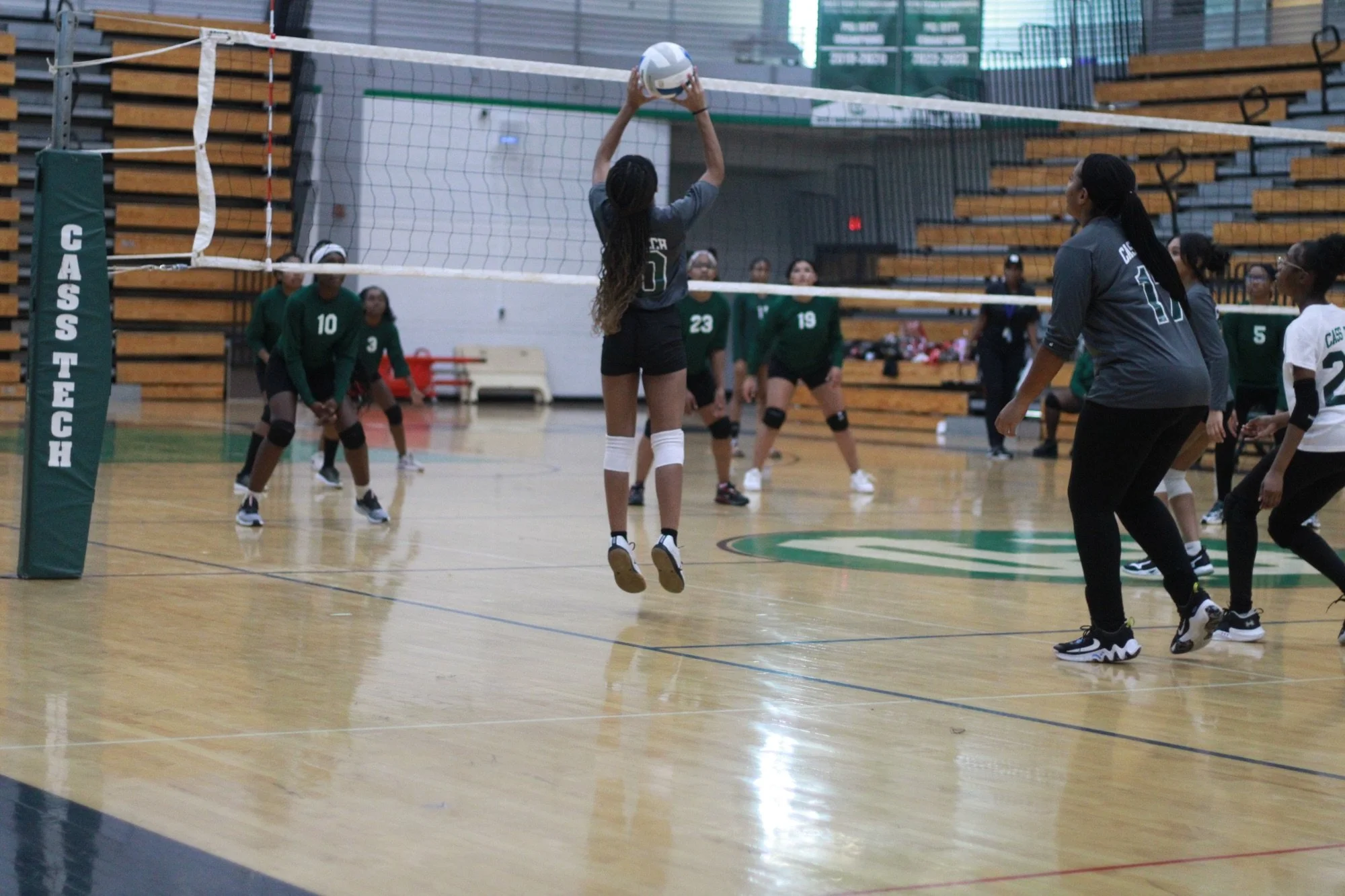
London Kirkland is setting the ball to another volleyball player while playing for Cass Tech High School. Credit: Rover Kirkland
“When it came to her coaching styles and giving constructive criticism, she took out that anger on us as players, which restricted our playtime,” Kirkland said of the coach.
The environment made Kirkland lose the love of the game, and she didn’t want to partake in the sport anymore.
In addition to negative coaches, health and wellness experts say pushy parents are another reason students may not want to play a sport in the first place.
Inside an Athlete’s Mind
Doron Willis, Michigan State University associate director of student-athlete wellness, has been working in the mental health field for over 10 years. In his experience, he has seen many young kids forced to play a sport they did not have an interest in.
“Parents see their young son or daughter with a certain skillset, and oftentimes the parent is really pushing the kid to partake in the sport,” Willis said.
Jason Novetsky, a sport and performance psychology coach with a practice based in Birmingham, said kids are usually pressured by their parents, peers, coaches and their community. In these situations, sometimes parents want to live through their kids. They get so into their kid’s athletic career that it becomes a part of their ego and identity, he explained.
These experiences can change the athletic perspective of kids. If a parent pushes a sport onto the kid, it can overwhelm the kid and ruin their experience. On the other hand, if the parent encourages their kid to play and does it with the intention of focusing on their child — instead of the outcome of what happens — it can have a better result, Willis said.
Willis explained that something athletes once loved doing and enjoyed, may no longer give them much pleasure because of a negative experience. Being in this position can also induce feelings of imposter syndrome, or a sensation of feeling out of place.
“When an athlete who comes across another athlete who’s just as good as they are and they no longer start having the success that they once had, they can begin to question themselves and their ability to play the sport.” Willis said.
Effects of Being in the Wrong Environment
Since 2019, Coach Robert Kirkland has seen children who feel obligated to play soccer in many of the recreational leagues he has coached. This could be due to the fact that families have to pay to play in these leagues, when students would otherwise try out for a school team.

Coach Robert Kirkland poses next to his son after winning a Saint Clair Shores Youth Soccer League game. Credit: Patrik Haynes
In his experience, he has seen plenty of kids who don't want to play, as well as kids who are happy to play. The way a coach teaches can change the mindset of a player, he said. When kids are treated harshly, it can hurt their attitude and opinion of the sport.
“Kids are very fragile, so you have to be careful with how you treat them,“ Kirkland said.
Throughout his coaching career, Kirkland has seen kids uninterested in a sport show little-to-no effort on the field or during practices. They stand out compared to kids who are more motivated and ready to play. These kids are much quieter compared to kids who enjoy the sport, he added.
According to the University of Rochester Medicine, people feel the most motivated when their emotional needs are met and they have autonomy over their behaviors, which explains why students may not feel motivated if they’re pressured into playing a sport.
On the other hand, coaches can play a positive role in motivating athletes. As a student-athlete, Kirkland said the easiest coaches to work with were understanding and patient. These coaches would help motivate her and provide constructive criticism.
“When it comes to traits that the coaches had that really helped me grow were patience, understanding and determination,” Kirkland said.
A View from the Stars
According to the National Collegiate Athletic Association, only about 1.4% of college athletes become professional football players. Stan Edwards is a part of that percentage. Edwards is a retired NFL athlete who played for the Detroit Lions and Houston Oilers between 1982 and 1987. He grew up in Detroit playing many sports with kids in his neighborhood, whether it was football season or baseball season.
Many of the kids in his neighborhood were older than him, which meant he faced pressure to become as good as them, or even better than them. Even then, he discovered he was a fast runner and was able to make it out of college as a running back for the NFL.
With his professional experience and knowing what goes into the sport, he believes that kids should not be forced into a sport. The consequences can be severe if you put your kid into a competitive environment they don’t want to be in, he said.
“You put somebody in a position that they don’t want to be in, and they can really get hurt. (That) can have a lifelong lasting effect,” Edwards said.
Tips for Leaving a Sport
Here are a few tips from Doron Willis and Jason Novetsky for students who want to get out of a sport they don't want to play.
Calmly talk to your parents about how you feel about the sport and how it is affecting you.
If you made an attempt to see if an activity was for you, it’s OK to step away from it.
If the sport is conflicting with other areas of your life, it’s OK to focus on those activities.
Talk to your coach about how you feel about the sport.
As a parent, sit down and have a conversation with your kid. Ask them what has become less enjoyable in the sport? You can then talk about how to fix it, or even look at it from your child’s point of view and how they feel about it.
This piece is part of the Detroit Journalism Summer Camp, run by The Detroit Writing Room in partnership with Planet Detroit and Coaching Detroit Forward.