
Phones in Schools: Friend or Foe?
Michigan banned phones in schools. One former educator wants to change how we talk about phone bans.
Story and Photography by Amyah Thomas
Emma Lee is a Salem High School senior in Canton. She’s one of many teens who feels they may be spending too much time on their phone, and she’s tried “a bunch of times” to limit her phone use.
“I’ve tried putting my phone in grayscale,” Lee said, referring to a setting that removes color from a phone’s display to make it less stimulating. “I tried using different apps, and none of those worked. I would always go back to scrolling. There's multiple times I realized, ‘Hey, my screen time is kind of high.’”
She is not alone. Her experience reflects a growing trend among teenagers.
According to a 2023 report from the U.S. Department of Health and Human Services, up to 95% of 13 to 17 year olds use a social media platform, and one-third report using social media “almost constantly.” A recent advisory from the U.S. Surgeon General stated that by the time a child becomes a teenager, they spend an average of four or more hours in front of a screen per day.
This increase in phone usage within the past decade has created an environment where teachers now feel they are in a competition with phones for students’ attention.
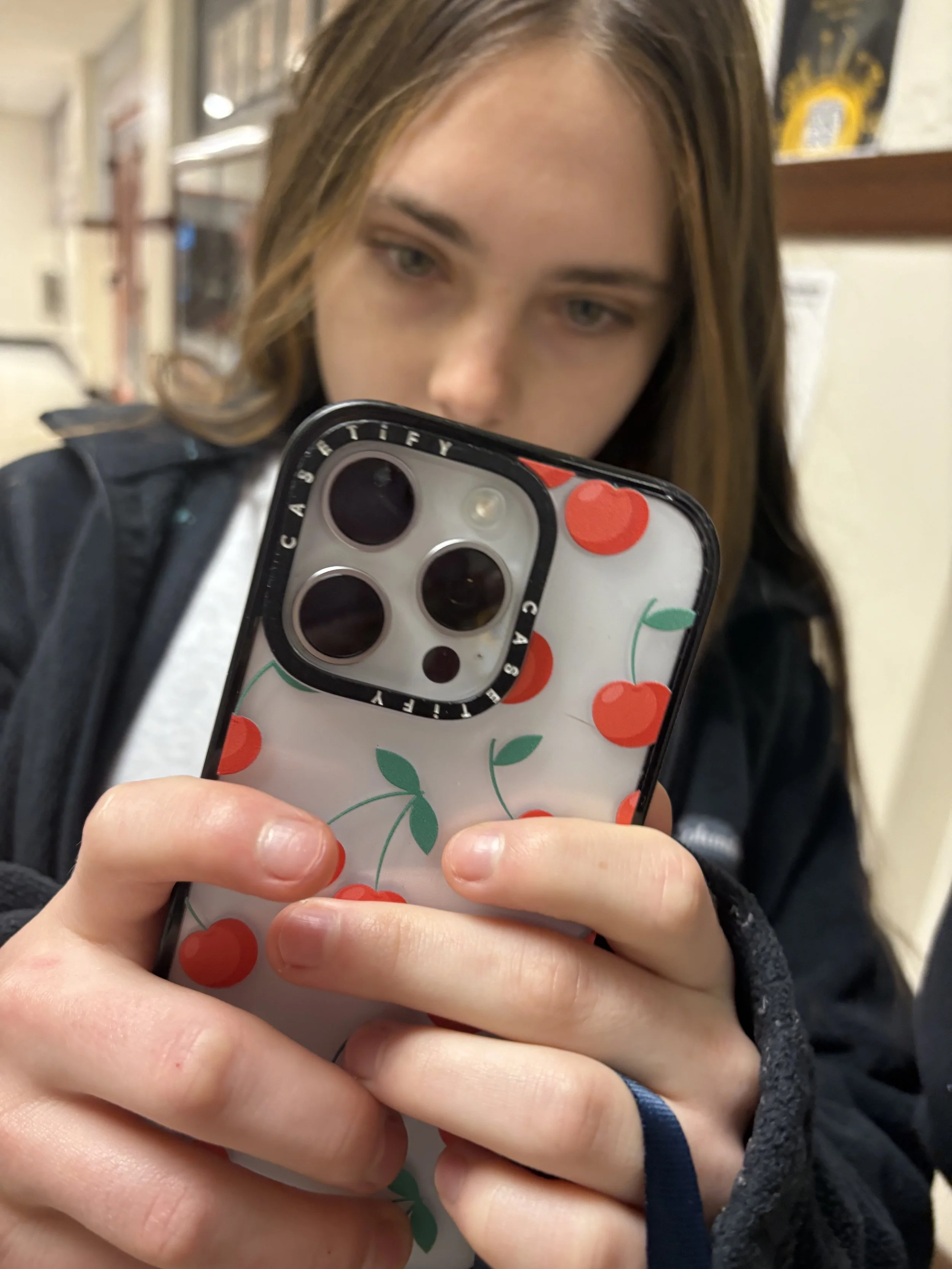
A photo illustration of a student using her phone during school.
Schools across the U.S. have been trying various approaches to counter this excessive phone use. This year, Michigan implemented a statewide ban on phones in schools during instructional time. Michigan joins the more than 35 states that have implemented restrictions on cellphone use during instructional time.
A 2024 survey of nearly 2,900 National Education Association members found that 90% of educators support policies implemented at the school district level prohibiting cellphone use during instructional time, and 83% support banning phones throughout the entire school day.
But not everyone believes banning phones is the best solution. At least one long-time educator says schools could benefit from considering alternatives that center young people’s needs.
Demetrius Lancaster, executive director of Joy Education Foundation, believes schools should spend less time focusing on keeping phones out of students’ hands and more time teaching students how to use them responsibly.
Joy Education is a tutoring nonprofit that provides online reading support for students. Before leading the organization, Lancaster worked as a reading teacher, dean of students and assistant principal, giving him firsthand experience with students both before and after smartphones became nearly universal.
Lancaster said instead of “gatekeeping the use of phones,” educators should look at “whatever is binge-worthy or addictive about the technology itself and how we can use that in a positive light.”
“I think phones create the most opportunity for kids to have access to information that they otherwise would have to rely on somebody else to provide,” Lancaster said. “What we’re seeing right now is a lack of intentionality about connecting the device they’re already connected to with the learning that’s happening in school.”
Research suggests Lancaster may be right. According to a 2025 report from London School of Economics, when teachers actively encourage smartphone use for instructional purposes, student performance increases.
“These results suggest that smartphone bans may overlook potential learning benefits as positive educational outcomes from guided use may outweigh distraction-related drawbacks,” the report said.
As a former teacher, Lancaster knows phones can be distracting in classrooms, but for him the issue extends beyond classroom distractions. Social media platforms and other digital tools are intentionally designed to capture users’ attention, making adult guidance even more important for young people who are still developing critical-thinking skills.
“If kids and adults are not working together to make sense of that stuff, I think that’s a real harm,” he said. “Technology has the potential to be incredibly helpful, but it also has the potential to shape young people in really negative ways.”
While educators continue debating cellphone bans, Lancaster believes the larger question is whether schools should prepare students for a world where technology is unavoidable.
“Rather than asking whether phones belong in classrooms,” he said, “educators should ask how they can teach students to use the technology in their pockets responsibly, critically and productively.”
This piece is part of the Detroit Journalism Summer Camp, run by The Detroit Writing Room in partnership with Planet Detroit and Coaching Detroit Forward.