
When Coaches Turn Sports from Fun to Fear
Negative coaching can have a lasting mental health impact on a student-athlete.
By Gabrielle Alawieh
Natalie Johns, a dual-sport athlete at Salem High School in Canton Township, has been playing basketball for as long as she can remember. Each season came with its challenges, but she found the ones with negative coaches were the most mentally draining.
Throughout middle school, Johns struggled with confidence in her sport. During the years leading up to high school, it is crucial to have a coach to help build confidence. Johns, however, had an Amateur Athletic Union coach who didn’t boost her self-esteem.
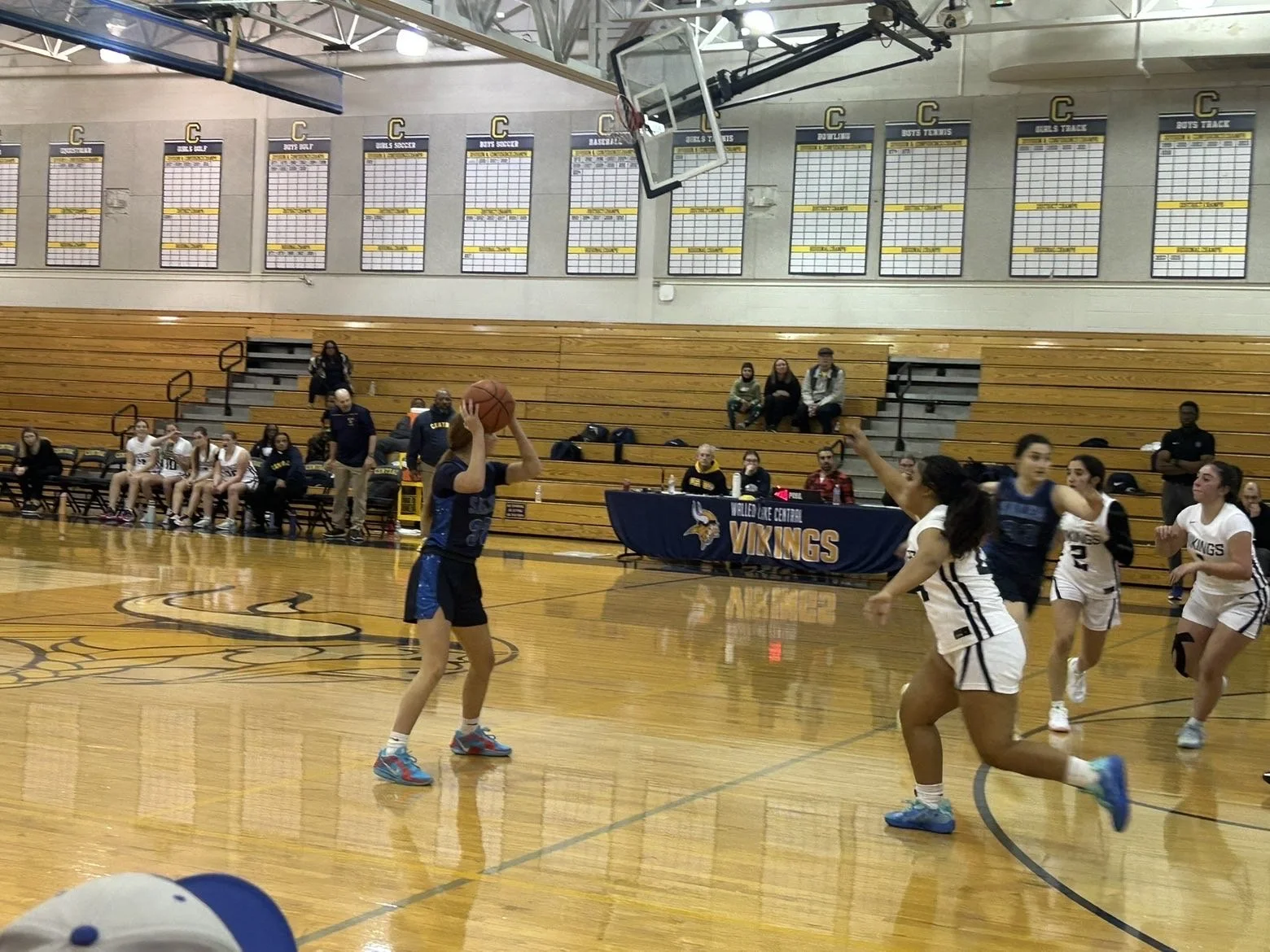
Salem High School sophomore Natalie Johns playing basketball. Credit: Shelly Johns
“The coaching style didn’t work well for me," she said. "The yelling and pressure put on by the coach made me nervous to make mistakes, and I was less confident.”
Although Johns, 15, had a positive experience throughout her athletic career, her experience with that coach had a lasting impact, affecting her athletic performance that season. Her lack of confidence carried into high school, with a fear of failure instilled in her mindset.
Johns' experience is unfortunately common. Many athletes experience harsh coaching, and research shows that 22% to 25% of competitive athletes have experienced an abusive coach. From a research standpoint, abusive means hostile in verbal and nonverbal ways, but excluding physical contact.
Sports psychologist Nathalie Jbeily noted that the negative coaching these athletes experience consists of more than just shouting.
“I've heard athletes describe environments where fear was used as a motivational tool, where mistakes were punished instead of treated as learning opportunities, where athletes were constantly compared to teammates, humiliated in front of others, ignored or made to feel that their value depended solely on their performance,” Jbeily said.
According to a 2024 study in the Journal of Interpersonal Violence, these tactics are generally seen as unacceptable behaviors in coaching. Throwing objects, humiliating others, pushing beyond limits or simply giving nonmotivational, negative comments are all aspects of abusive coaching, according to the study.
For athletes like Johns, sports are something to take pride in. However, the burnout becomes visible when exposed to abusive coaching.
Johns said that while working with her abusive coach, she felt less excited to go to practice, and instead felt more anxiety. Only her teammates brought her enjoyment.
“It was discouraging when I would play bad, and I needed to rely on someone other than my teammates to lift me up. I wanted my coach to believe in me, not just my friends,” Johns said.

Wayne County Community College head women’s basketball coach Yvonne Hammoud. Credit: Allyson Davis
The use of harsh words in sporting environments has been normalized for a long time, but as time goes on, the negative impact of those words has been better recognized.
“Many coaches have good intentions,” Jbeily said. “The issue is that sometimes methods that were once considered normal are now known to have important psychological consequences.”
Laurie Miller, an athletic counselor for ages 9 to 25 at Skadi Sports Psychology, said the impact of abusive coaching includes perfectionism, over-training and over-emphasis on winning. She noted that high levels of anxiety can come from these environments as well, which can break student-athletes' confidence and cause them to lose enjoyment.
But why is this so detrimental to younger people, specifically adolescents?
“Adults often forget just how much teens are going through. Many changes occur physically, mentally and socially while teenagers' brains are not fully developed,” Miller said. “When we also factor in that teens have always been in a position of inferiority, where they are required to listen to their elders and follow directions, this magnifies the risk of teens staying in a toxic coaching environment.”
Wayne County Community College head women’s basketball coach Yvonne Hammoud expressed the importance of having caution when coaching high school athletes.
“I believe high schoolers are the toughest group to coach," she said. "I currently coach college basketball and high school AAU, and the high school girls seem to be much more emotional. Part of that seems like it’s a need to please parents and onlookers, another part is the influence of friends and comparing themselves to others. They have a feeling like they have to be perfect and seem to have a more difficult time specifically with being hard on themselves. So it’s very important to be mindful of how coaches handle players that are still young and finding themselves."
Additionally, Hammoud shared coaching tactics she avoids to ensure a positive environment. They include dwelling on mistakes, encouraging negative self-talk, and publicly embarrassing or blaming players.
Avoiding these abusive tactics allows for a better environment for young athletes overall. Johns said the coaches she enjoyed working with did not use these techniques and helped her improve her skills in positive ways when she made mistakes.
Coaches can still discipline their players, but there are positive and healthy ways to go about it. Creating a safe and competitive environment for athletes will allow them to grow and showcase their full potential, Hammoud said.
“I am big on friendly competition and practice! It’s a way to be tough and disciplined,” she said, adding, “As a coach I believe that sports are supposed to be fun ... and when players have fun they perform better.”
This piece is part of the Detroit Journalism Summer Camp, run by The Detroit Writing Room in partnership with Planet Detroit and Coaching Detroit Forward.