How Athletic Identity Shapes Athletes On and Off the Field
For millions of athletes, the dream doesn't end with a final whistle. It ends with a question: “Who am I without my sport?”
By Robert Thompson
Ava Wojciechowski has loved track and field since the age of 11. However, one intense teammate at Bowling Green State University made her, and half of her back-to-back Mid-American Conference champion team, give up collegiate track forever.
According to Wojciechowski, the teammate “lives, breathes and eats athletics.” When there were talks of the teammate being kicked off the team, Wojciechowski said the environment became so hostile that she and five teammates quit the team.
While some of her peers were devastated by giving up the sport, Wojciechowski said she approached the end of her athletic career differently. “Probably since high school, I kind of had this idea of my career ends at college,” she said.
Now a 21-year-old senior at BGSU, Wojciechowski understood early on that the odds of competing professionally were slim. However, not every athlete enters college expecting their athletic career to end with graduation.
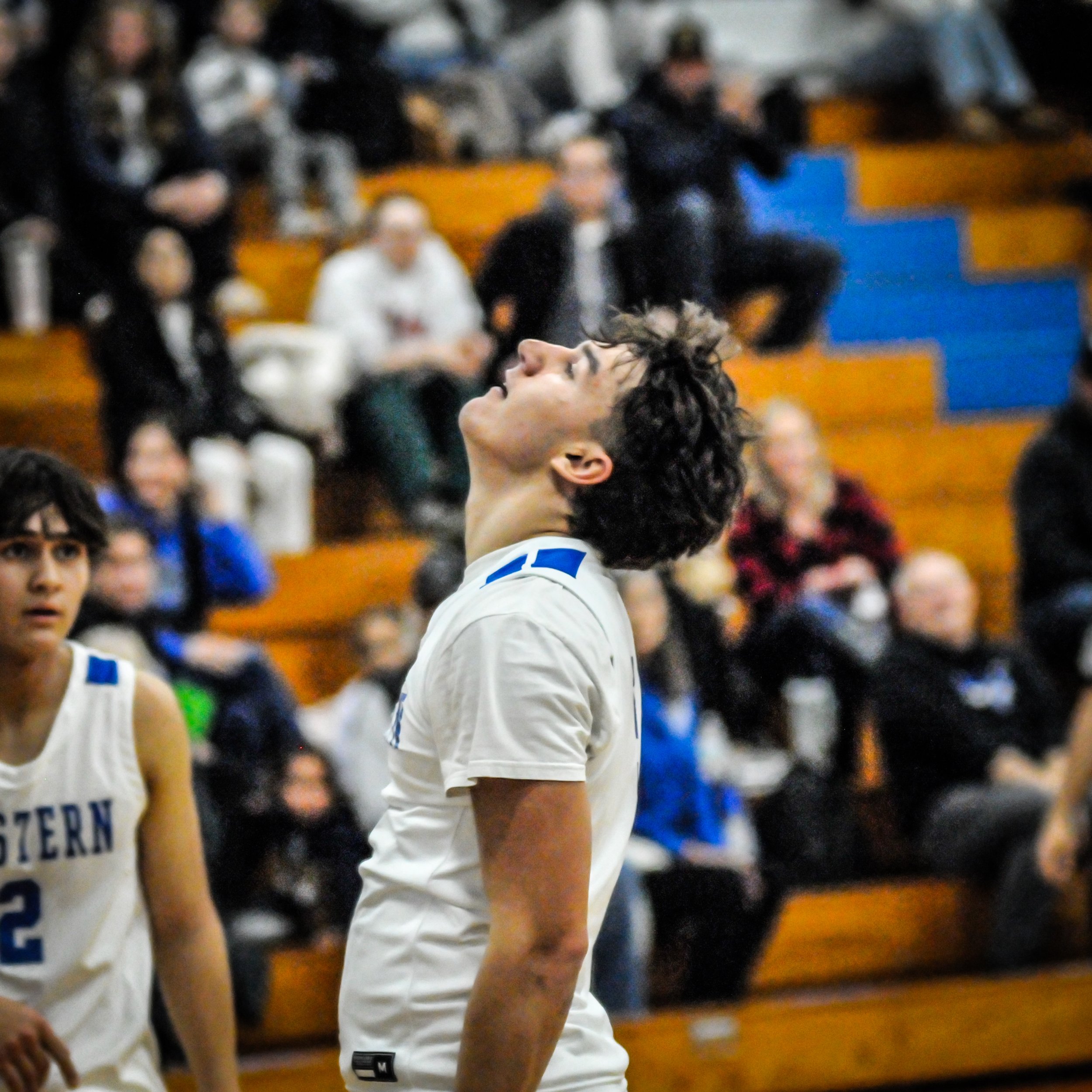
A Walled Lake Western High School basketball player stares at the ceiling. Credit: Robert Thompson
More than 8 million students played high school sports during the 2024-2025 school year, according to the National Federation of State High School Associations. Yet the number of athletes who reach the professional level across the NFL, MLB, NHL, NBA and MLS dwindles to roughly 4,600, as of 2024.
Dwayne Thompson II, a former division 1 and current arena football player, has continued to chase a professional career. Now 26, he has a wife and newborn daughter in his hometown of Detroit, but said if he stopped, “It would be kind of a slap in the face to how far I came. As far as facing adversity, going through this process, to not take the chance to go to the higher level.”
A 2026 NCAA survey found more than half of division 1 male athletes believe they will become a professional athlete. Thompson is among them. While Wojciechowski accepted early that college would likely mark the end of her competitive career, Thompson continues to pursue professional football because of the sacrifices, time and identity he has invested in the game.
Many athletes also fall into catastrophizing thinking — when athletes “constantly think about the worst outcomes” and make a small problem feel like a massive disaster, said Doron Willis, associate director of student-athlete wellness at Michigan State University and a former D1 football player at South Carolina and Bethune-Cookman universities. For example, “If I don't get playing time, or this amount of playing time for the next game, then I'm not valuable in any way, shape, form or fashion,” Willis said.
Goals like playing time and playing professionally can become tied to athletes’ self-worth. Willis’ example illustrates how many athletes measure their value by athletic success, making any setback feel significant. His explanation suggests how athletic identity and catastrophizing can become connected during an athlete's transition away from sports.
While catastrophizing can make setbacks feel overwhelming, Willis believes there is another way athletes can better prepare for the end of their playing careers.
“Identify who you are outside of the game you play,” he said. Having interests and relationships outside athletics allows athletes to compete “freer” because their identity isn't tied solely to performance, Willis said.
Developing an identity beyond sports can also make the transition out of athletics less overwhelming when an athlete's career comes to an end, Willis added.
Rachel Amity, associate athletic director for athletic counseling at Eastern Michigan University, agrees with that belief. To illustrate why building an identity outside of sports matters, she compared two hypothetical athletes: one whose life revolved entirely around their sport, and another who has relationships, hobbies and interests outside of athletics.
Amity said the all-sports person “would have a harder time transitioning out of a sport than the person that had non-sport relationships, non-sport hobbies and activities, because the person who was all sports, when the sport goes away, that feels like a loss of everything.”
Willis had that personal experience and struggled to rebuild his identity after playing football, and Amity sees the same pattern in the athletes she works with. To prevent this, both Willis and Amity said preparing for life after sports should begin long before an athlete's final game.
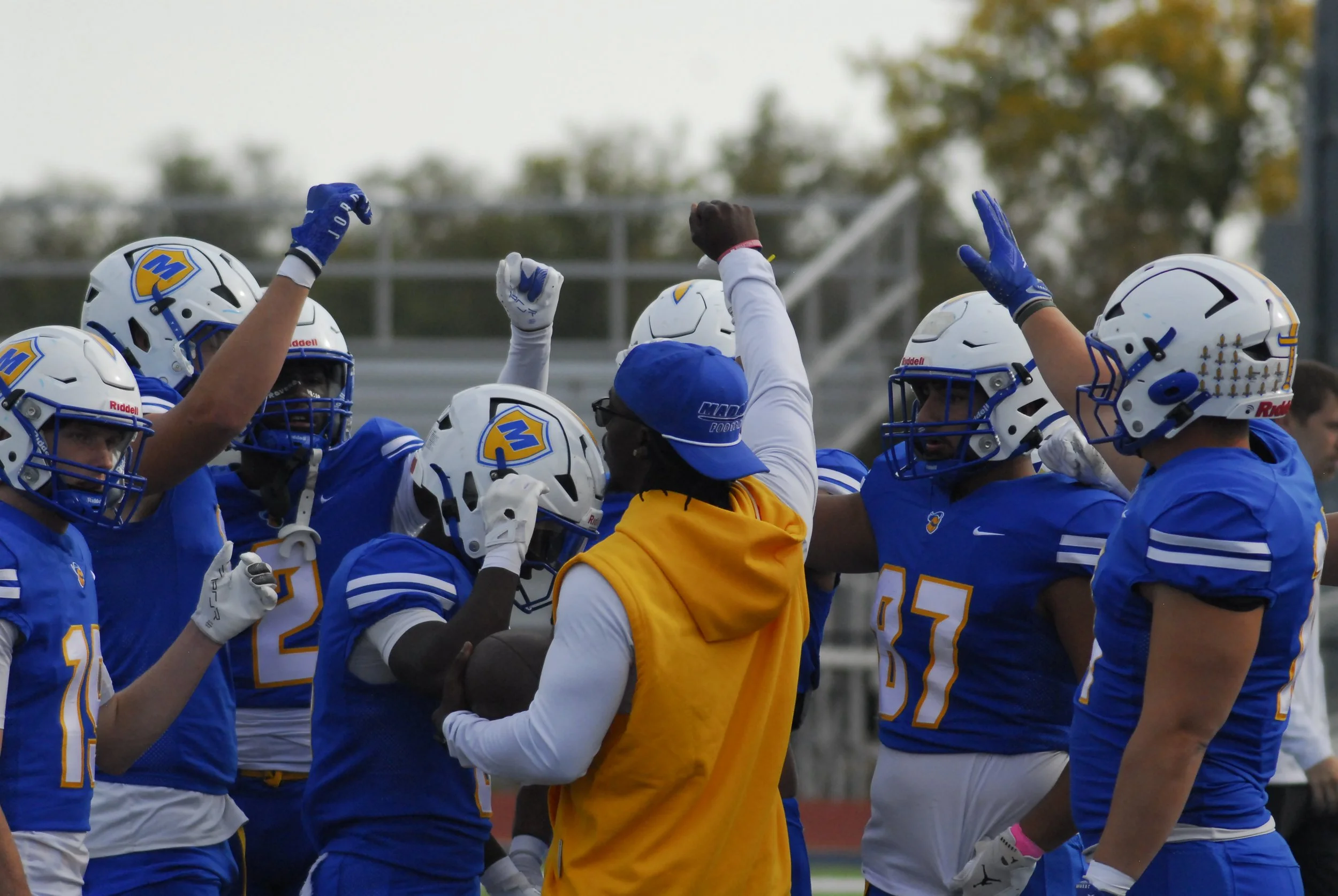
Madonna University Coach Prince AyoOla huddling with his players during gameday warmups on an Oct. 18, 2025 game against Indiana Wesleyan University. Credit: Robert Thompson
For Prince AyoOla, a football coach at Madonna University in Livonia, preparing athletes for life after football starts before their final season.
As a former NAIA All-American at Concordia University, AyoOla understands how easy it is for athletes to let football consume their college experience. Looking back at his years as a student, he admitted he wasn't there to “play school,” meaning he only focused on playing football. Participating in school was not on his list of priorities.
That experience has shaped the way he coaches and recruits at Madonna University.
“As far as getting (athletes) to a career, I like to open up those conversations earlier now instead of later,” AyoOla said.
Rather than waiting until an athlete's eligibility is nearly exhausted, AyoOla encourages players to see football as a pathway to opportunities beyond the game.
“You use football as a tool to get you through school, to get you that degree,” he said. Once athletes get that degree, he added, they often realize they weren’t taking their degree as seriously as they were taking their sport.
AyoOla said he also reminds players of the opportunities available after graduation.
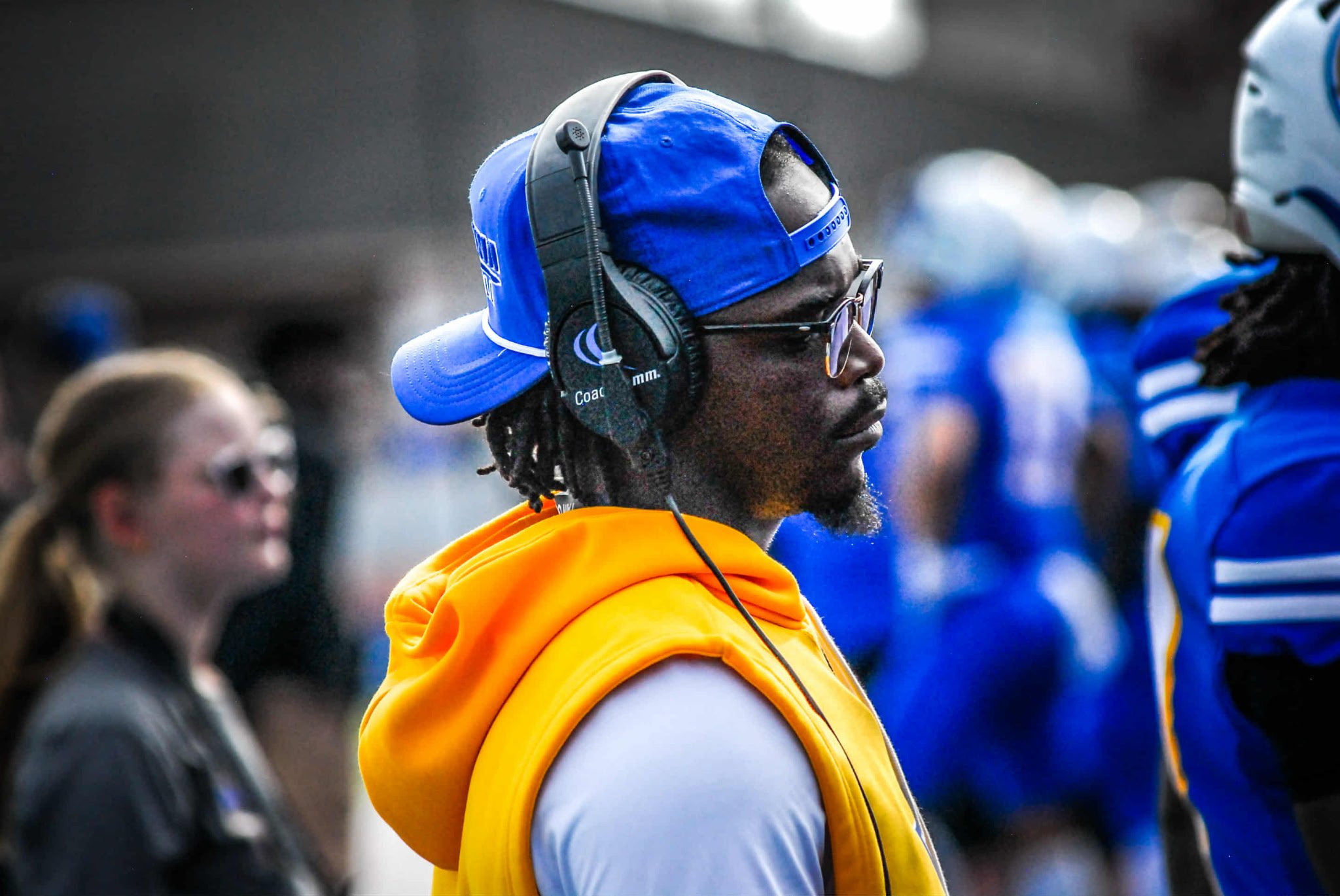
Coach Prince AyoOla watches his Madonna University football players from the sideline during an Oct. 18, 2025 game against Indiana Wesleyan University. Credit: Robert Thompson
“You can jump right out of college and jump right into the workforce and make good money and be able to support your family, have health benefits,” he said. “Those are the things that we're not thinking about as athletes going into college.”
His approach extends beyond career planning. AyoOla intentionally builds relationships with his players outside of football, believing those conversations help prepare them for life beyond the sport.
That philosophy has shaped the way AyoOla mentors his players. For him, “getting to know these guys off the field and seeing what they're into” matters just as much as what happens between the lines.
Wojciechowski understood that lesson long before her final throw. She knew track would one day end, so she never allowed it to become the only thing that defined her. Not every athlete is able to do the same.
Every athlete eventually plays their final game. When the crowd disappears, the locker is cleaned out and the uniform is put away for the last time, what remains isn't a championship, a statistic or a roster spot. It's the person the sport leaves behind.
That's why AyoOla believes the most important responsibility of a coach isn't simply developing a better athlete.
It's “developing that man,” not that player.
This piece is part of the Detroit Journalism Summer Camp, run by The Detroit Writing Room in partnership with Planet Detroit and Coaching Detroit Forward.