Who Supports the Mental Health of Aged-Out Foster Youth?
When foster kids age out of the system, some transition to extended foster care or independent living, getting financial support from the state. But for those who pursue higher education, money is not an easy fix. They say they need mental support too.
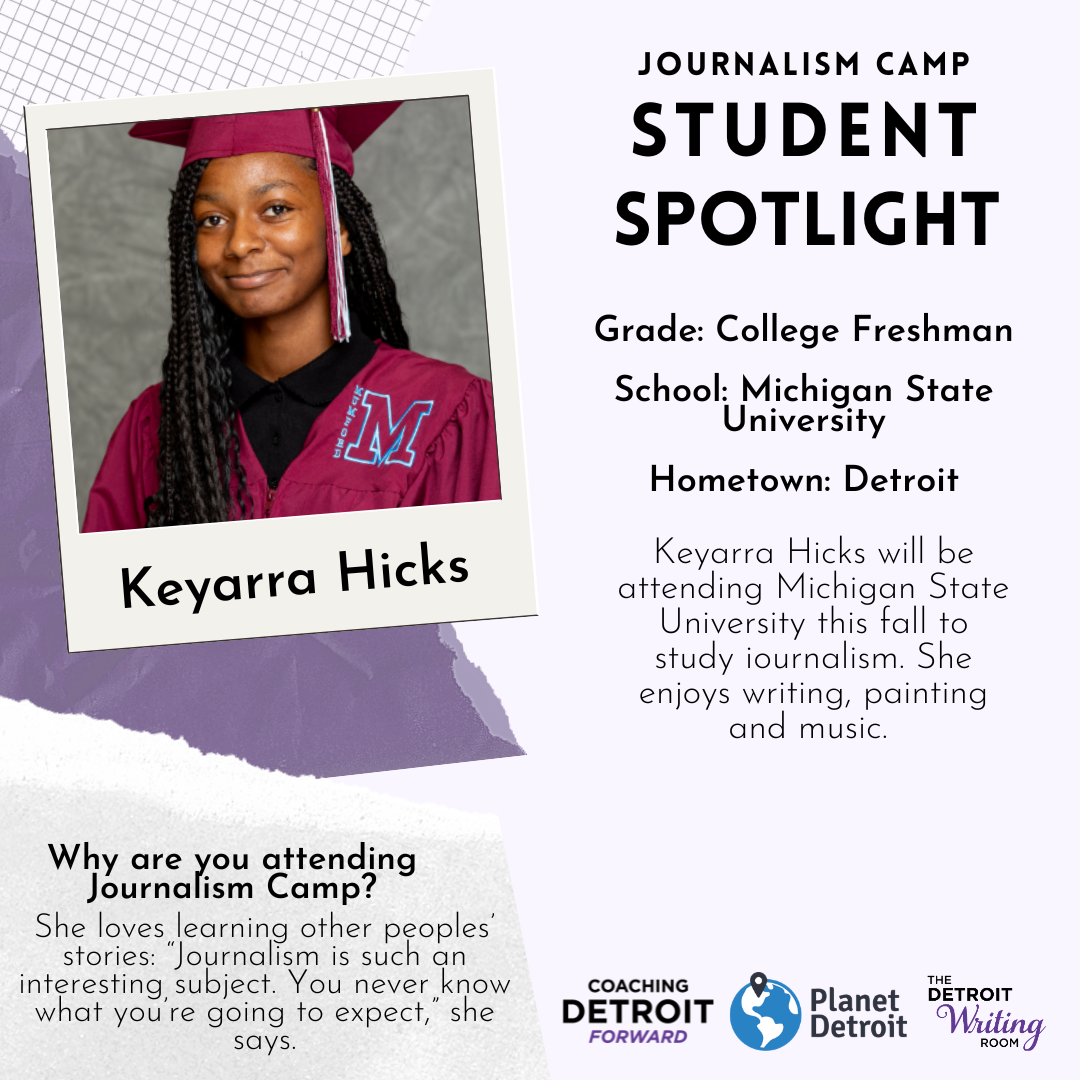
By Keyarra Hicks
There are nearly 345,000 foster kids in the United States. Of those kids, about 10,000 are in Michigan’s foster care system, according to the Michigan Department of Health and Human Services.
Many foster youth choose to participate in extended foster care programs when they age out at 18, which helps support them financially. Scholarships reserved for foster youth can also support them with financial aid for school. But who is supporting aged-out foster youth emotionally?
“I still take therapy because of my childhood. Money is a big help, but it doesn’t fix the mental part,” says Savannah Graham, a foster care alum and Wayne State University freshman.
Detroit’s Park West Foundation is one organization that supports students in foster care. This includes students transitioning to extended foster care, job opportunities and life after high school.
“If you put into Park West, they will put into you,” says Graham, who has been affiliated with Park West for two years. The organization has given her financial support for school events like prom and college prep programs.
In March, Park West hosted a resource fair at Mumford High School that connected students to jobs and entrepreneurship training.
“I had two jobs last summer and one this summer all because of Park West,” Graham says.
Over the last few years, Park West Program Director Saba Gebrai has worked with foster care high school students to help them complete the Free Application for Federal Student Aid, or FAFSA, and other Michigan student aid forms, so students can afford college.
A 2025 study published in an American Educational Research Association journal reviewed the secondary and postsecondary education outcomes of students who experience foster care. The study found only about 8% to 12% of foster youth earn a two or four-year college degree by their mid-to-late 20s. In comparison, about 49% of young adults in the general population complete a degree.
At Michigan State University, students in the Fostering Academics, Mentoring Excellence (F.A.M.E) program are prone to facing education completion issues. F.A.M.E supports students who have experienced foster care or are navigating college without family.
“Without family or other supportive adults to encourage and assist students in navigating higher education, we tend to see higher rates of stopouts, course failure and a lack of clear academic direction,” says Chiquita Whittington, MSU’s F.A.M.E director. “Some students enroll in courses that do not apply toward a specific major because they do not have guidance in planning their academic path. As a result, these students often take longer to complete their undergraduate degrees, commonly five to six years. Students are not always aware of the resources available to them on campus without that additional support.”

Fostering Academics, Mentoring Excellence graduate Serenity Hall stands with Michigan State University F.A.M.E director Chiquita Whittington. Credit: Brandon Drain
Serenity Hall, who graduated from MSU and F.A.M.E, said the program helped her emotionally and mentally by giving her a community where she feels comfortable, supported and safe to be herself.
“Students who have experienced foster care are going to face challenges that most people will never fully understand, but every struggle is an opportunity to grow and become stronger,” Hall says.
By providing coaching services, F.A.M.E supports housing, academic planning and guidance through the graduation process. F.A.M.E also provides scholarships for housing during winter break. But F.A.M.E supports students more than just financially. The program acknowledges the emotional struggle for foster youth transitioning to higher education.
“In addition to these logistical barriers, there is also the emotional transition that comes with attending a college or university,” Whittingham says. “Students may struggle with the lack of structure or day-to-day guidance that many of their peers receive from family members.”
By giving that extra push and letting the students know that they aren’t alone, MSU F.A.M.E helps the aged-out foster youth in Michigan.
“The experiences of students who have experienced foster care are not something they can erase or change, but those experiences do not define who they are. Just because they have experienced foster care does not mean they are damaged,” Hall says. “Like any difficult experience, they can heal, grow and build a meaningful future.”
This piece is part of the Detroit Journalism Summer Camp, run by The Detroit Writing Room in partnership with Planet Detroit and Coaching Detroit Forward.