The Tension Between Faith and Queer Identity: 1 Detroit Teen's Experience
One teen shares her experience coming out to her family and how she’s had to redefine her faith in light of how her church views her.
By Ryan Bell
Detroit’s Pride celebrations at Hart Plaza are meant to be a refuge, a place where queer Detroiters can gather, celebrate and feel seen. But every summer, the same confrontation returns: Christian street preachers line the festival’s edges, shouting warnings of sin and urging attendees to repent. For many festival‑goers, the clash is just a loud interruption. For others, it’s a painful reminder of what they face at home.
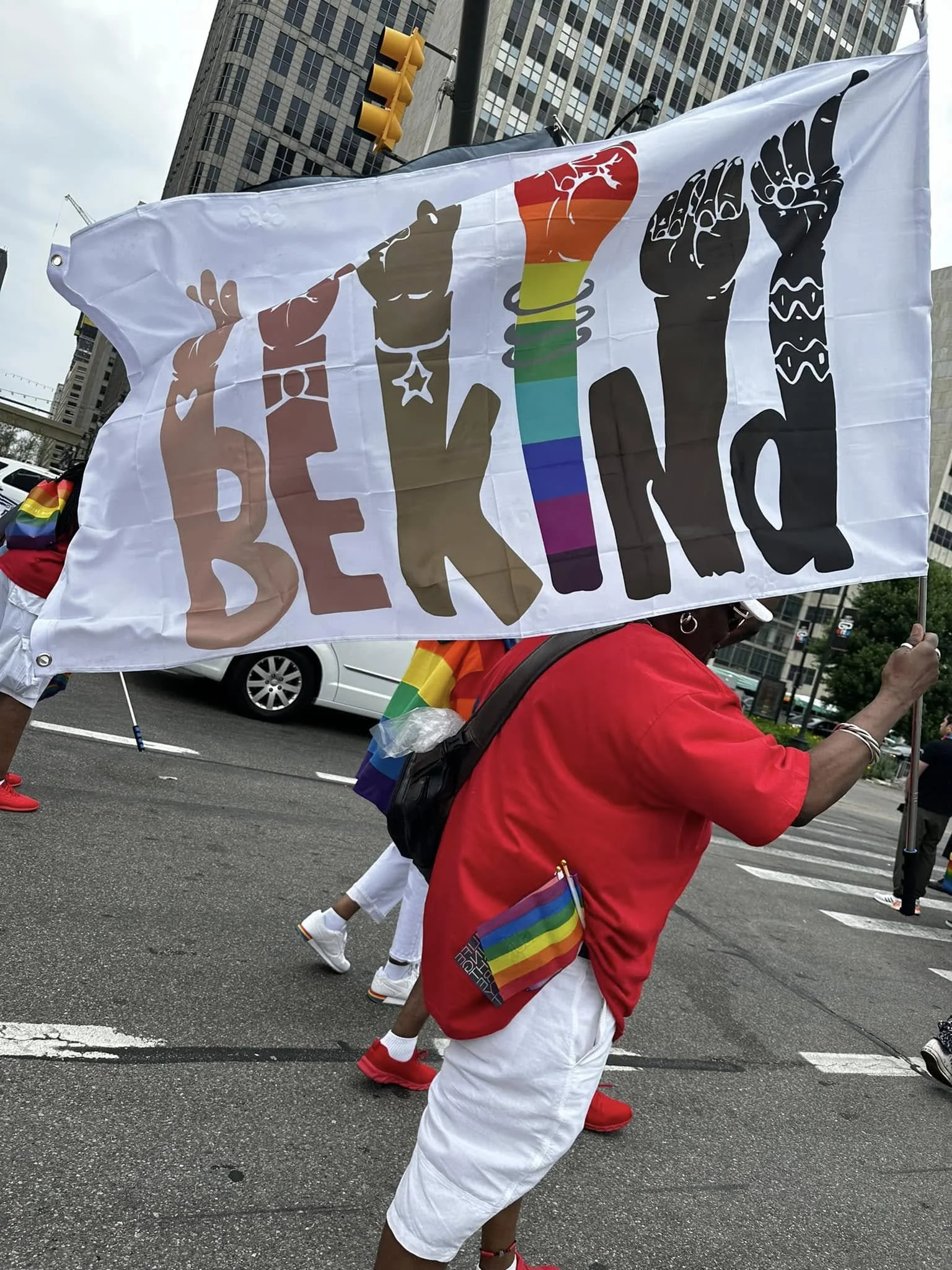
Via Motor City Pride’s Facebook page
Roughly 61% of Detroit area residents identify as Christian, according to the Pew Research Center Religious Landscape Study. That faith landscape is far from uniform. Some churches openly welcome LGBTQ members, while others preach strict rejection. And for queer youth raised in those environments, the consequences can be devastating.
A Childhood Shaped by Hostility
For 17‑year‑old Izzy Boyd, the tension between faith and identity didn’t start at Pride; it started in her own living room.
“My church environment was very hostile,” she said. “They talked about gay people like they were confused, stupid people who don’t actually know anything about themselves.”
Boyd grew up hearing sermons and conversations that framed queer identity as a moral failure. That messaging didn’t stay inside the church walls. It seeped into her home, shaping how her family responded when she came out.
She described a recent argument with her mother so severe it escalated into what she called a “custody battle.” Her father considered taking custody due to her mother’s hostility toward her, she explained.
When Faith Becomes a Fault Line
Detroit’s Christian communities aren’t all the same. Many Methodist, Episcopal and progressive Baptist churches openly support LGBTQ people now, welcoming queer members and even performing same‑sex marriages. But plenty of others still teach that being queer doesn’t fit with their faith, and that divide ends up splitting families right down the middle.
For teens like Boyd, that split feels less like a disagreement and more like being told your whole identity is wrong.
“It makes me feel like I should see myself as disgusting or just lame,” she said. “If part of who I am, who I love, is considered disgusting, then it makes me feel awful almost every single day.”
Her experience mirrors what many Detroit LGBTQ youth report: emotional distress, strained relationships, and in some cases, homelessness or forced separation from family.
Separating God From the People Who Claim to Speak for Him
Despite the pain, Boyd hasn’t abandoned her faith. Instead, she’s redefined it.
She explained that she reconciles her Christianity and queer identity by “separating God and the church.” The church, she said, is made of people flawed, biased and sometimes cruel. God, in her view, is something else entirely.
“I feel like God loves me unconditionally,” she said. “I might have to be a certain way for people at my church to love me, but I don’t have to be that for God.”
Her perspective reflects a growing movement among young queer Christians who refuse to let religious institutions define their worth.
The Human Cost of Rejection
When asked what advice she’d give to queer youth facing rejection from Christian families, Boyd didn’t sugarcoat it.
“It’s gonna suck a**,” she said plainly. “But it gets better.”
She described her own coming‑out experience as “one of the most awful” moments of her life, recalling “some of the most disgusting things” her mother had ever said to her. But she also emphasized resilience, the idea that self‑acceptance matters more than others’ approval.
“You’re your own person,” she said. “The way other people see you, they don’t define you. You define it.”
A City Wrestling With Its Faith
Detroit’s Pride festival is just one stage where this conflict plays out publicly. The deeper story is happening quietly in homes, churches and conversations between parents and children. As Detroit continues to evolve, its Christian communities face a choice: cling to doctrines that alienate queer youth, or embrace interpretations that allow families to stay whole. Many churches have already chosen acceptance. Others remain firmly opposed.
For young people like Boyd, the stakes are deeply personal. The clash between faith and identity isn’t just a cultural debate, it's a question of belonging, safety and family. And every summer at
Hart Plaza, when the street preachers arrive with megaphones and signs, that question echoes across the riverfront once again.
This piece is part of the Detroit Journalism Summer Camp, run by The Detroit Writing Room in partnership with Planet Detroit and Coaching Detroit Forward.